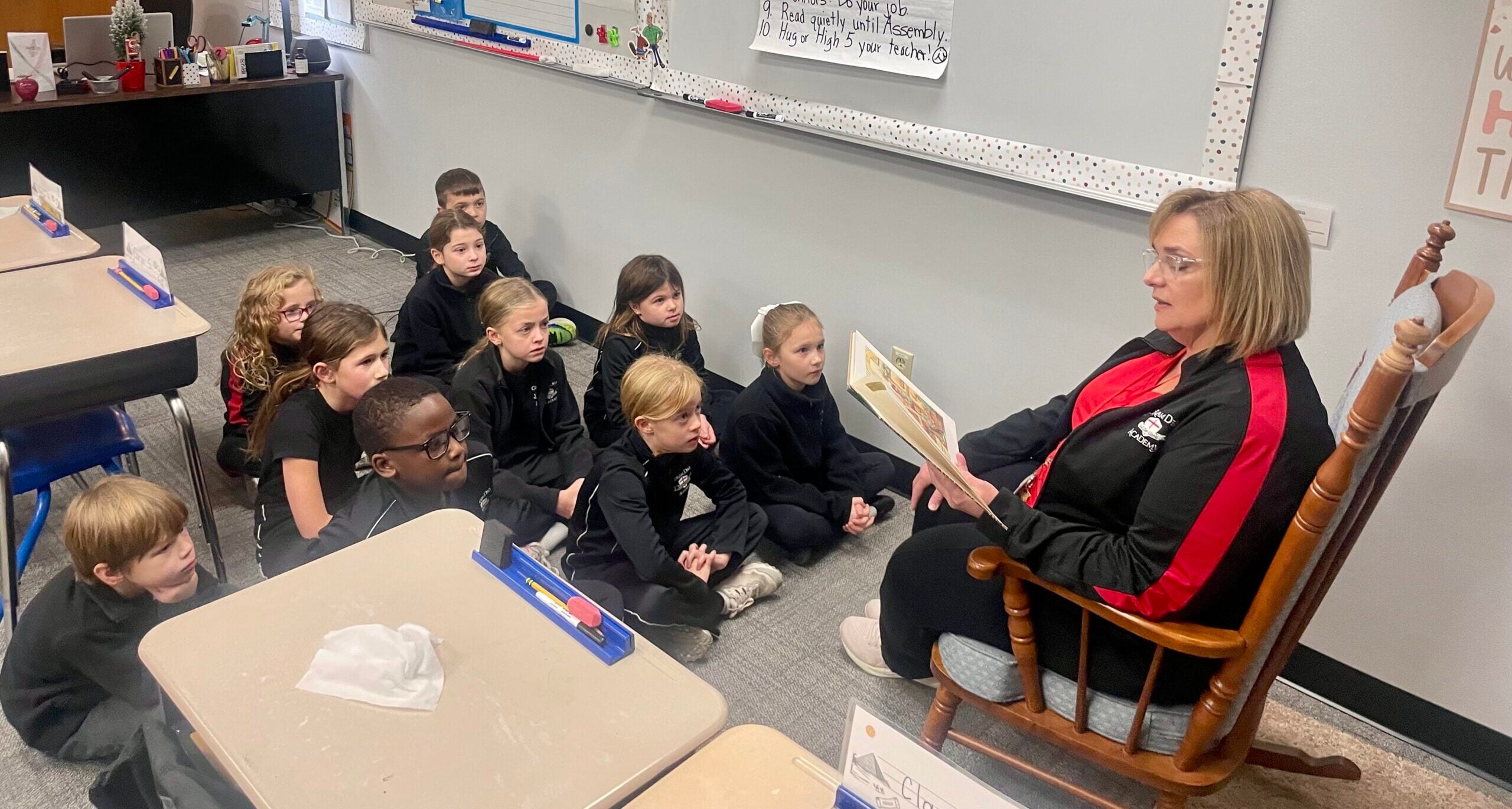
You may have heard the term Science of Reading used often in educational settings or conversations. What researchers, educators and lawmakers are now confirming what classical educators have long known: phonics is essential for learning to read. Charlotte Mason wrote, “A child has not begun his education until he has acquired the habit of reading to himself, with interest and pleasure, books fully on a level with his intelligence.” Helping children reach this point is one of our most important responsibilities as parents and teachers.
At Coram Deo Academy, we use the University of Florida Literacy Institute (UFLI) as our core reading curriculum. UFLI is an explicit, systematic program that teaches the foundational skills required for proficient reading. Its carefully designed scope and sequence ensures that students build skills step-by-step and learn to apply them with confidence and automaticity.
What Instruction Looks Like
Students complete two structured lessons each week. During these lessons, they:
- Learn the rules and patterns of English spelling
- Build and break words using specific patterns
- Read words in isolation and in sentences
- Apply new skills through games and decodable stories
Lessons follow the familiar I do, We do, You do model used throughout CDA:
- I Do: The teacher models the new pattern or skill
- We Do: Students practice with guidance
- You Do: Students apply the skill independently through word-building, reading or writing activities
Why Homework Matters
Weekly homework is an important extension of classroom learning for all students. Even strong readers do not always spell well, so it is important for all students to complete this home practice. Children need multiple exposures to spelling patterns–through reading, writing and spelling–to learn when and how to use them.
For example, the /aw/ sound can be spelled aw, au, or augh.
- aw appears at the beginning or middle of a word (e.g. awe)
- au typically appears in the middle of words (e.g. haul, cause)
- augh appears in the middle of the word (e.g. taught)
Homework reinforces the same patterns students learn that week, including “heart” (irregular or sight) words and word chains that help students practice making and breaking words.
How Parents Can Support Reading at Home
Beyond completing homework, parents can strengthen reading skills with simple, effective routines:
- Echo reading: Parents or older siblings can read a sentence, paragraph or passage with strong fluency and expression; the child then reads the same thing.
- Partner reading: Take turns reading pages
- Choral reading: Read a passage together at the same time
- Vocabulary support: Discuss unfamiliar words as you read aloud–children don’t automatically understand every word, especially in books above their independent reading level
These practices help children develop fluency, vocabulary, and confidence–skills that are essential as they grow into independent, joyful readers of good books.
Check out the UFLI games page here. They can practice words here, just as we do at school. You can choose which lesson they are currently learning or create a list of words they have missed on their spelling lists. As your child’s teacher if you are unsure which lessons have been covered.
Check out the Home Support page for UFLI here.