One of the many tools in the toolbox of classical pedagogy is the use of a classroom catechism. Historically, catechisms were used by the church to teach new Christians the contents of the Christian faith in a systematic way. Many of these catechisms had their own doctrinal distinctives, but they all shared three things in common: explanations of the Apostles’ Creed, the Ten Commandments, and the Lord’s Prayer. The Apostles’ Creed would teach new Christians what to believe and what their beliefs meant. The Ten Commandments would teach new Christians how to live. The Lord’s Prayer would teach a new Christian how to pray. In other words, the catechism served as the foundation for a full, systematic, and articulate outworking of Christian belief and practice.
Since catechisms were foundational for young Christians, it was necessary for the catechism to be memorized. New Christians were to learn the catechism by heart so it would be treasured in their hearts.
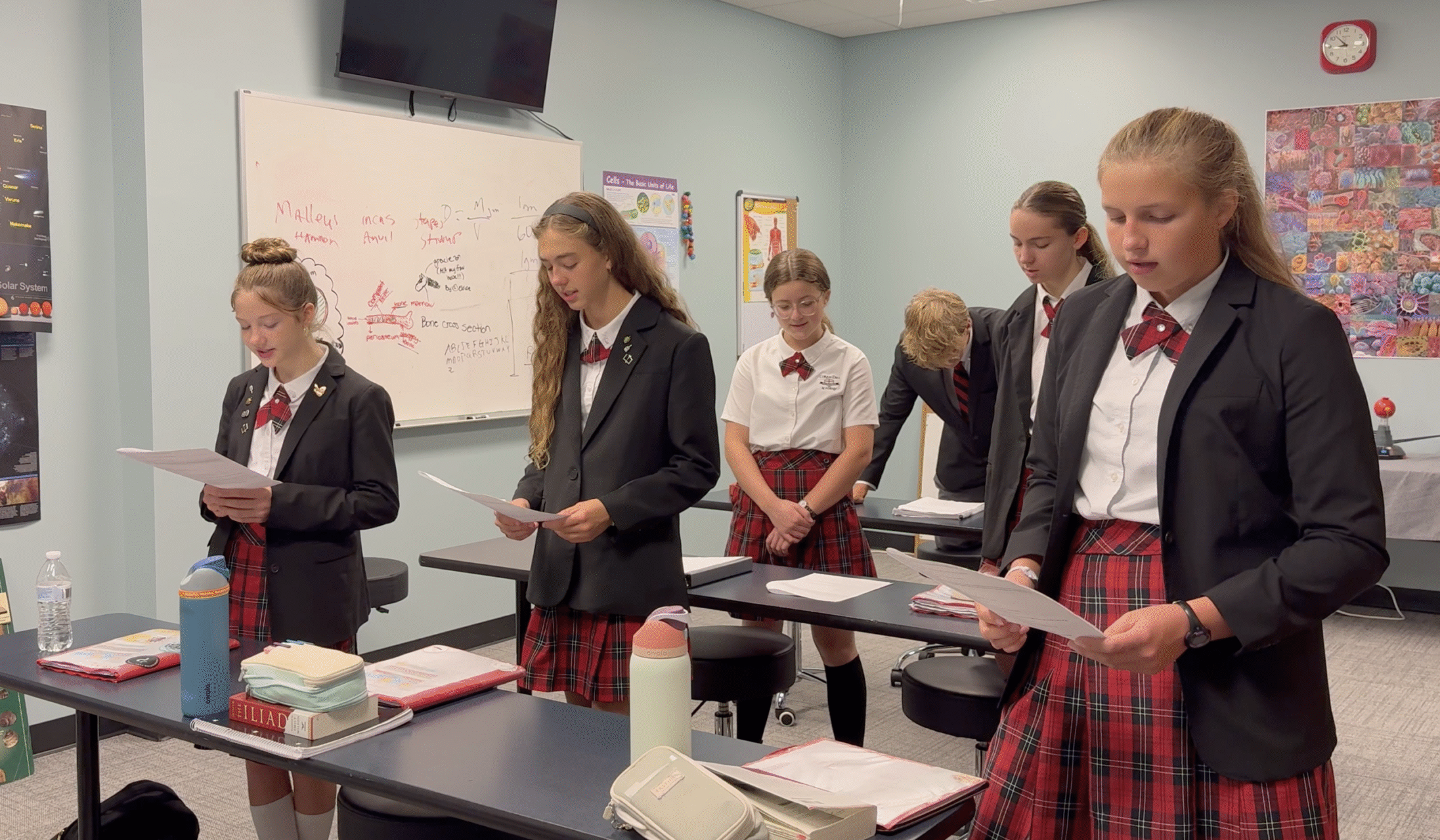
The classroom catechism functions in many similar ways to a church catechism. Instead of functioning as an outline for the faith, the classroom catechism is the outline for the course. Instead of laying the foundation for faith and practice, the classroom catechism lays the foundation to understand class content and to integrate it with other subjects. As the church catechism fills the minds and hearts of young Christians, the classroom catechism ought to fill the minds and hearts of young students with the best quotes from the Western tradition, which have been curated by the teacher.
Classical Christian education claims to teach students not what to think but how to think. However, knowing how to think can only happen in a context that has already told the student what to think. Just as the church catechism indoctrinated those new to the faith, the class catechism inculturates students with the best ideas of Western thought. This is a good thing. As Paul says in Phil. 4:8, “Whatever is true, whatever is worthy of respect, whatever is just, whatever is pure, whatever is lovely, whatever is commendable, if something is excellent or praiseworthy, think about these things.” The classroom catechism is an effective and practical way to apply Paul’s exhortation in the classroom so students have true, lovely, and excellent things to contemplate.
However, in order for the class catechism to work, it must be used every day. Not only will daily group recitation help the students to memorize the context, it is also a great way to settle and start a class. Students chatter before class so the classroom catechism harnesses that chatter for good and productive ends.
Hopefully, the case for the classroom catechism has been made but catechisms can also be used in the home and workplace. Family dinners are a great time to recite the questions and answers from a denominational catechism of choice. Daily shared work meetings are a wonderful opportunity to recite the company’s mission and vision.
The catechism has been an effective tool in shaping millions of people for hundreds of years. There is no better time to recover and implement the catechism in the school, home, and workplace than now.